How-to Updated 2026
Faraday Pouches and Relay Theft: Protect Your Key Fob
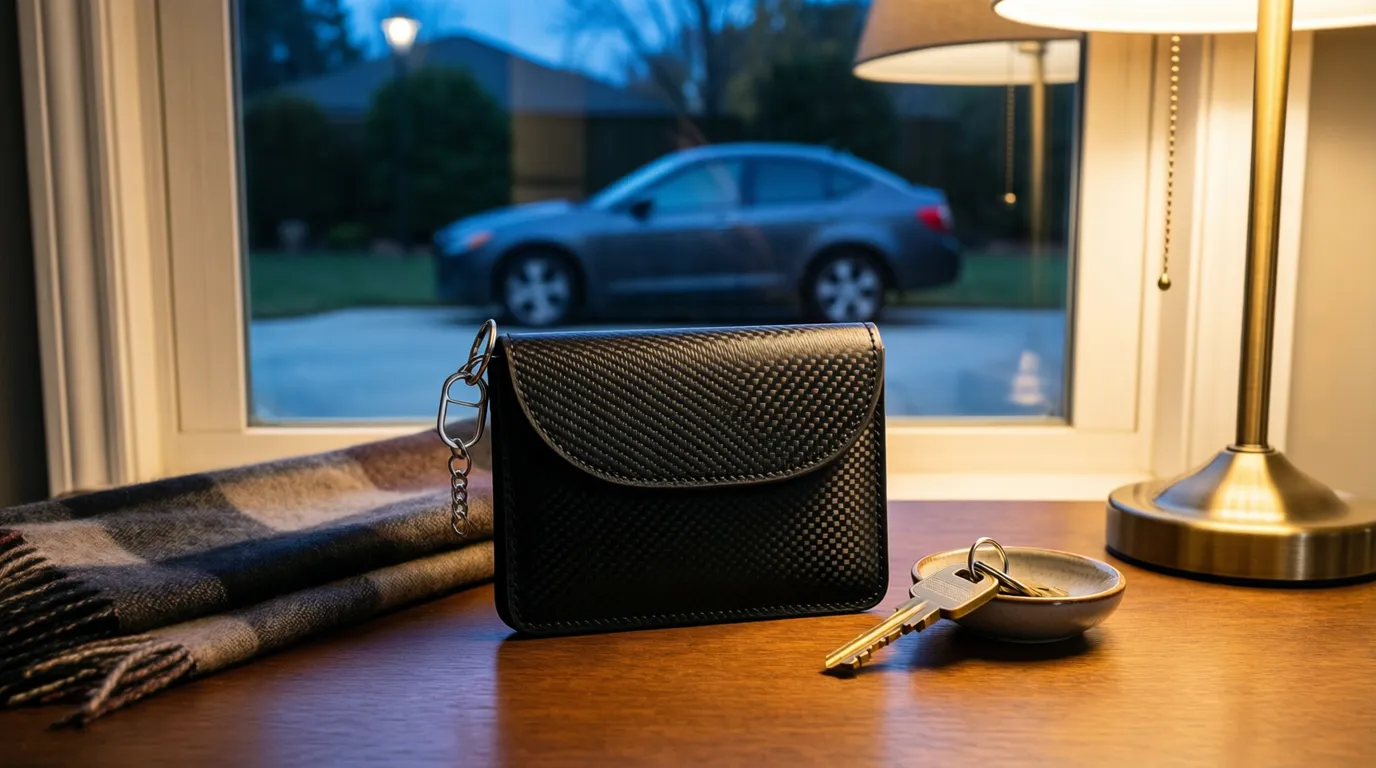
If your car unlocks and starts just by having the key nearby, it can be stolen without the thieves ever touching your key — an attack called relay theft. The good news: a few dollars of Faraday pouch, used correctly, shuts it down. Here's how the attack works and how to stop it.
How relay theft works
A keyless fob constantly broadcasts a short-range radio signal. In a relay attack, two thieves work together: one stands near your house with a device that captures the fob's signal — often through a wall or window — while the second stands by your car with a device that relays that signal to it. The car thinks the key is present, so it unlocks and starts. No window is broken and no key is touched.
How a Faraday pouch stops it
A Faraday pouch is a small pouch lined with signal-blocking material. Drop your fob inside and the lining prevents the radio signal from escaping, so there's nothing for a thief's device to capture. It's the simplest, cheapest defense against a relay attack — but only when you actually use it.
Test yours when it arrives
Put the fob in the pouch, seal it, and walk up to your car. If the door won't unlock from the handle and the car won't detect the key, the pouch works. If it still unlocks, the pouch isn't blocking the signal — return it.
Step by step
- 1 Store the fob in the pouch. Keep your key fob in a Faraday pouch whenever you're not driving — especially overnight, when most relay thefts happen.
- 2 Move keys away from doors and windows. Even pouched, keep keys away from the front door and ground-floor windows, where a capture device can get closest to the signal.
- 3 Pouch the spare too. Your spare fob broadcasts the same signal. Store it in a second pouch or a metal container, not loose in a drawer near an exterior wall.
- 4 Add a physical backup. Layer a visible deterrent — a steering wheel lock or an OBD-port lock — so that if a signal defense ever fails, the car still can't be driven away easily.
- 5 Re-test periodically. Linings wear with daily folding. Re-test the pouch every few months by checking that your car can't detect the pouched key.
What we recommend

Lanpard Faraday Bag for Key Fob (2-Pack)
A two-pack covers your daily fob and the spare. Look for a double-layer RFID-blocking lining and a size that fits your fob without forcing the seal.
Pros
- Inexpensive
- No setup — just drop the fob in
- Covers spare keys too
Cons
- Only works when you actually use it
- Linings wear over time and should be re-tested
- Snug for large or multi-button fobs
We may earn a commission on qualifying purchases made through links on this page, at no extra cost to you. It never affects which product we recommend. Learn more.
Product prices and availability are accurate as of the date/time indicated and are subject to change. Any price and availability information displayed on Amazon.com at the time of purchase will apply to the purchase of this product. Certain content that appears on this site comes from Amazon. This content is provided ‘as is’ and is subject to change or removal at any time.
Frequently asked questions
- Does a Faraday pouch really stop car theft?
- It stops relay attacks specifically, by blocking the fob's signal so it can't be captured and relayed. It won't stop a thief who tows the car or breaks in physically, so pairing it with a steering wheel or OBD-port lock is the most reliable approach.
- Will the pouch damage my key fob?
- No. Blocking the radio signal doesn't harm the fob or drain its battery any faster — the fob simply can't be detected while it's sealed inside.
- Can I just put my keys in the microwave or fridge?
- A microwave can partially block the signal but isn't reliable, and a fridge or freezer can damage the fob. A purpose-made Faraday pouch is cheap, portable, and the safer choice.
- How do I know if my car is even at risk?
- If you can unlock and start your car without pressing a button — just by having the key nearby — it uses keyless entry and is a potential relay-theft target. Traditional press-button remotes that require you to physically turn or insert a key are not vulnerable in the same way.
Related
Sources
- Locksmiths.co.uk – Keyless car theft & prevention
- ScienceInsights – How to prevent relay attacks and keyless car theft
- OffGrid – Faraday key fob bags and keyless car theft
Specs and prices are compiled from the sources above and current as of the update date. Availability and pricing change — confirm on the retailer page before buying.